

A complete organic fertilizer production line comprises multiple stages. The choice of granulation method directly influences the equipment configuration and the physical form of the final product. As one of the most mature wet granulation processes, disc granulation technology plays a pivotal role in bridging the upstream and downstream stages of the organic fertilizer production process.
The positioning of disc granulation technology within the production line is first evident in its tolerance for raw material characteristics. Unlike extrusion granulation, which requires a moisture content below 20%, disc granulators can process decomposed powdery materials with moisture levels ranging from 25% to 40%. This eliminates the need for additional pre-drying equipment, resulting in a more streamlined production line and lower investment costs.
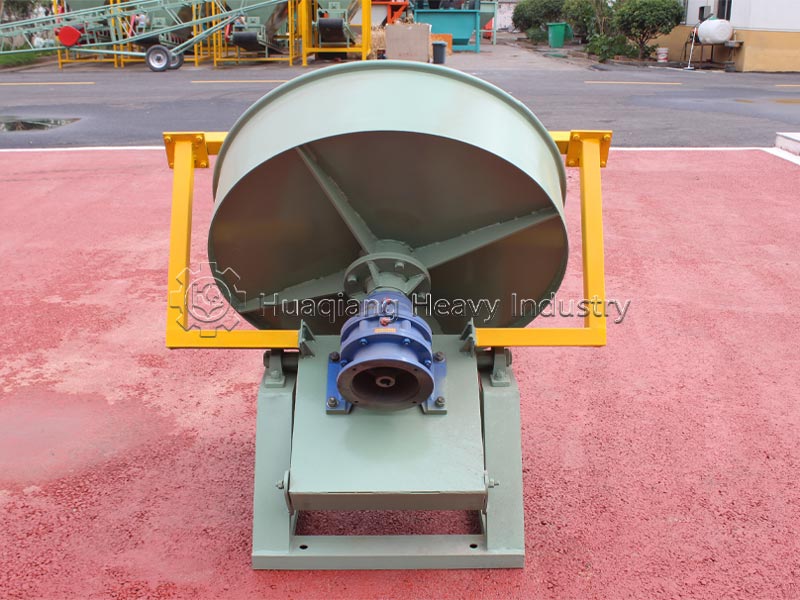
Within the production line, parameter adjustment is crucial for ensuring optimal granulation performance. The disc inclination angle is adjustable between 40° and 55°; a steeper angle yields smaller granules, while a shallower angle promotes granule growth. Rotational speed must be maintained at 60%–80% of the critical speed, and the water spray rate also significantly affects the granulation yield. These three parameters must be adjusted in real-time based on material conditions to ensure a granulation rate consistently above 90%.
Wet granules produced by the disc granulator proceed to the drying stage. With an initial moisture content of 8%–12%, the process requires a rotary dryer and a cooler. For standard organic fertilizers, hot air temperatures can range from 200°C to 300°C, whereas bio-organic fertilizers require low-temperature drying (below 60°C) to preserve viable microorganisms. Dried granules undergo screening, and qualified products are sent for packaging.
In summary, the value of disc granulation technology lies not only in transforming powdery materials into spherical granules but also in its moderate investment requirements and flexibility regarding material moisture content. It offers a mature and reliable process pathway for organic fertilizer projects utilizing raw materials such as livestock manure and humus.