

In organic fertilizer production, the seamless integration of the initial fermentation and crushing stages directly impacts the efficiency of the subsequent granulation and packaging processes. The windrow compost turning machine is responsible for decomposing raw materials into uniform organic matter, while the half-wet material crusher processes the decomposed material to a fineness suitable for granulation. Together, these two machines form the “first critical stage” of the organic fertilizer production process.
Windrow composting is the most common method for large-scale aerobic fermentation. Raw materials are piled into long rows—typically 2–6 meters wide and 1–2 meters high. The windrow compost turning machine moves slowly along the row; its rotating drum—equipped with paddles or tines—lifts material from the bottom to the surface, breaking up clumps and remixing the pile. This process simultaneously introduces fresh air to supply oxygen to aerobic microorganisms and releases exhaust gases and water vapor, helping to equalize the temperature throughout the pile.
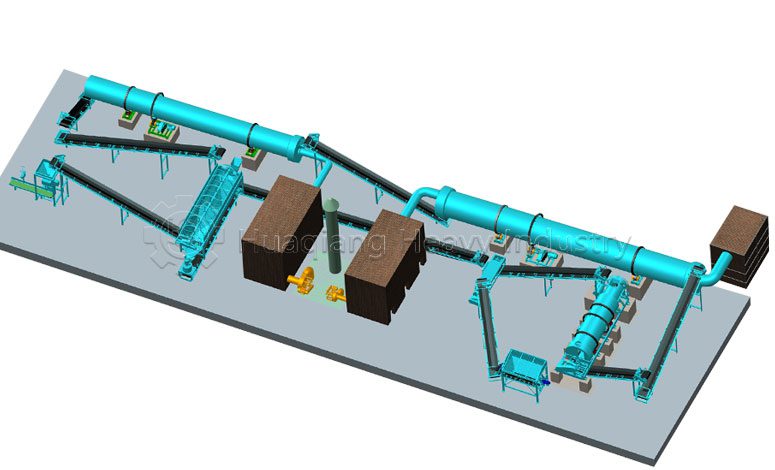
Decomposed material often contains clumps; attempting to granulate it directly would compromise both the pelletization rate and granule strength. This is where the half-wet material crusher comes into play. Its key advantage over standard crushers is the ability to process materials with moisture content as high as 30%–50% without clogging. Utilizing a dual-rotor or chain-based internal structure, the machine employs high-speed rotation to impact and shear the material, breaking clumps down into a fine powder. The output fineness can be adjusted via screens to a range of 40–80 mesh, meeting specific granulation requirements.
Within the overall organic fertilizer production process, the turner ensures the quality of decomposition, while the crusher handles material refinement. When selecting equipment, the turner’s specifications should be determined based on the required processing volume, and the crusher should be sized with a capacity slightly exceeding the turner’s output to ensure balanced production rates across these initial stages.