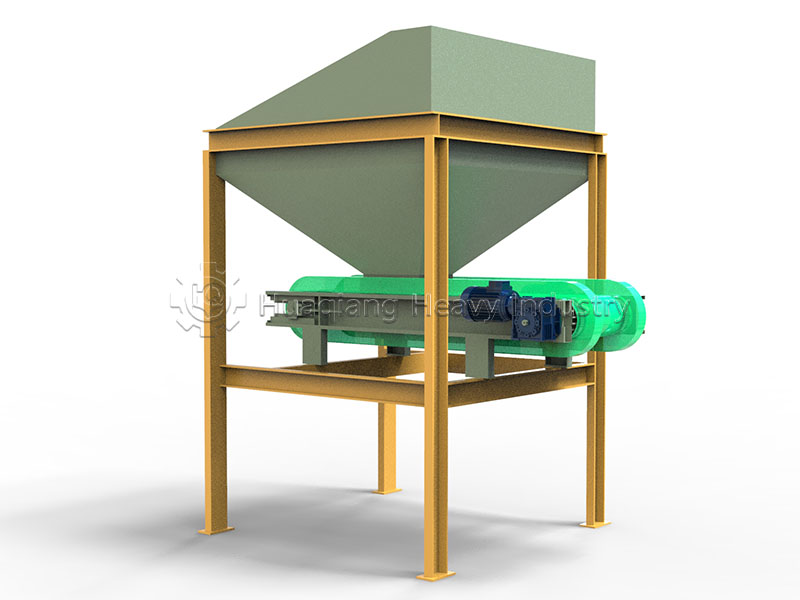
The multiple silos single weigh static automatic batching system is an economical solution designed for small and medium-sized fertilizer enterprises. It consolidates the feeding from multiple raw material bins into a single static weigh hopper, enabling precise proportioning of various ingredients with minimal weighing equipment. This system is ideal for production lines—such as those for compound fertilizers, organic-inorganic compound fertilizers, and blended fertilizers—that involve up to eight types of raw materials and require high batching accuracy. Compared to dynamic systems that use a dedicated scale for each bin, this system reduces the number of load cells and weigh hoppers, thereby lowering equipment investment and electrical costs. Meanwhile, the static weighing method ensures measurement accuracy, making it a practical choice for fertilizer producers seeking a balance between performance and cost-effectiveness.
Working Principle
The system performs static measurement of each raw material sequentially according to the formula. The feed screw of a specific raw material bin starts, conveying material into the shared weigh hopper while load cells monitor the weight in real-time. Once the material reaches the preset formula value, the feed screw stops; the system waits for the weigh hopper to stabilize before recording the actual weight. Subsequently, the next raw material bin begins feeding, and the weight in the hopper accumulates based on the existing load. This process continues until all formula ingredients have been measured. Upon completion of the measurement sequence, the weigh hopper’s discharge gate opens, and the material is discharged into the mixing equipment in a single batch. After automatically completing one batch, the system proceeds to the next cycle. Because the material remains stationary during static weighing, impact errors associated with dynamic feeding are eliminated, resulting in accurate and reliable measurement data.
Equipment Configuration
Material Storage Bins: Multiple bins configured according to raw material types; constructed from welded steel plate with a conical section designed for smooth discharge.
Variable-Frequency Feed Augers: A screw feeder is installed at the outlet of each bin, utilizing variable-frequency speed control to adjust feeding rates.
Shared Weighing Hopper: A hopper mounted on load cells; capacity is designed based on the maximum total batch weight.
Pneumatic Discharge Gate: A pneumatic flap valve at the hopper bottom ensures rapid discharge with no residual material.
Bin Wall Vibrators: Installed on the conical section of the bins to prevent material bridging and ensure continuous feeding.
PLC Control System: Features an integrated touchscreen for setting recipes, monitoring the weighing process, and recording batching data.
Support Platform: A steel structural frame arranging bins and the weighing hopper in tiers to optimize space utilization.
Operational Precautions
Before startup, verify that the material in each bin matches the recipe to prevent errors. Ensure the weighing hopper is clean and free of residue, and check that the load cell mounting area is free of accumulated material or obstructions.
Perform a no-load test run before operation to verify proper feeding and weighing functions. During production, monitor the weighing instrument readings; if significant deviation occurs for any raw material, pause immediately to inspect the feed auger and load cells.
Do not start the feed augers while loaded with material; follow the sequence of starting the auger before initiating material flow. Replenish bins promptly when material levels are low to avoid feeding interruptions.
When switching recipes, update settings on the touchscreen and run a test batch for verification. After shutdown, clear residual material from the weighing hopper and feed augers to prevent moisture absorption and clumping, which could affect weighing accuracy.