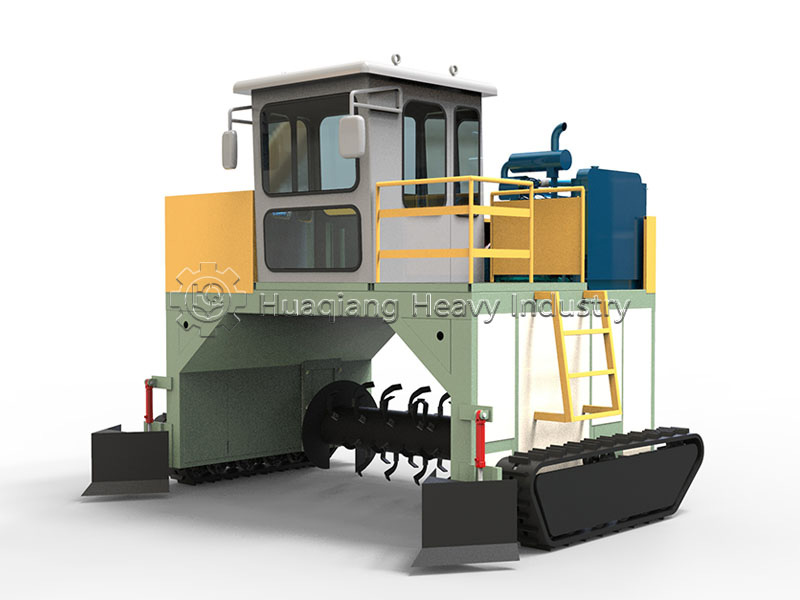
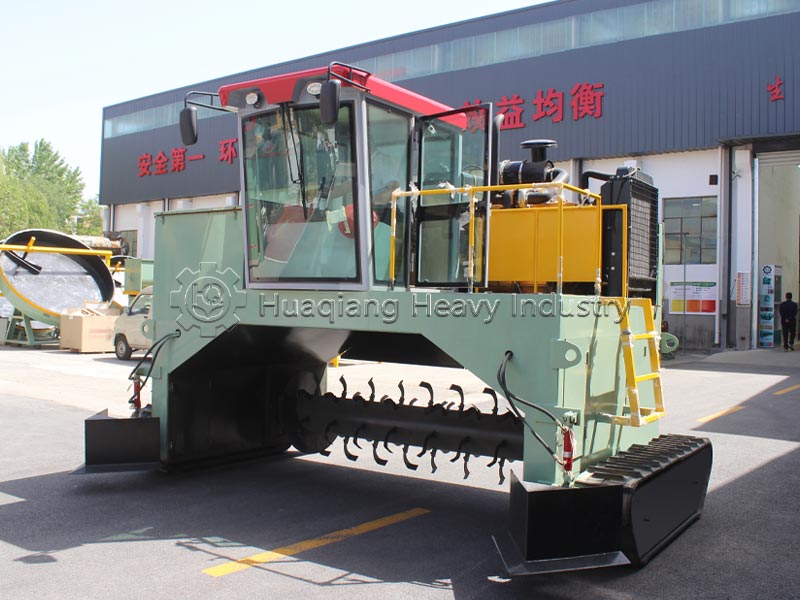
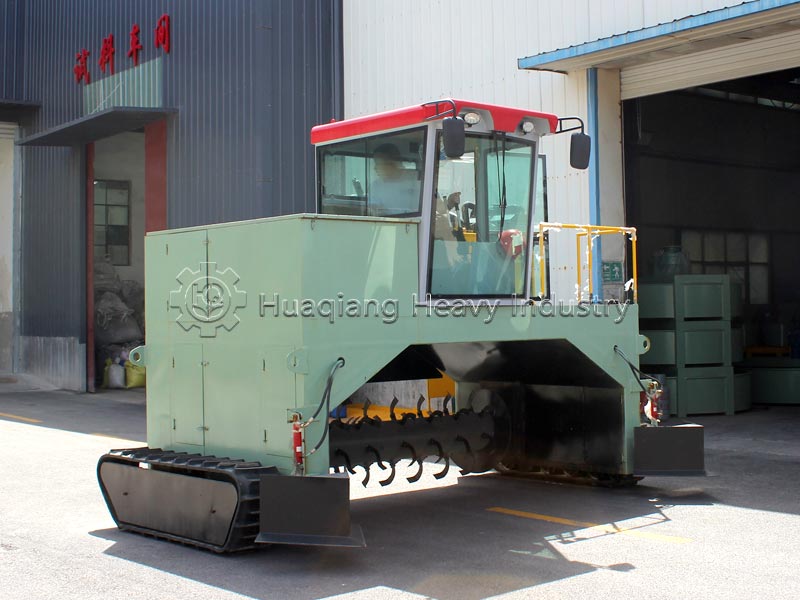
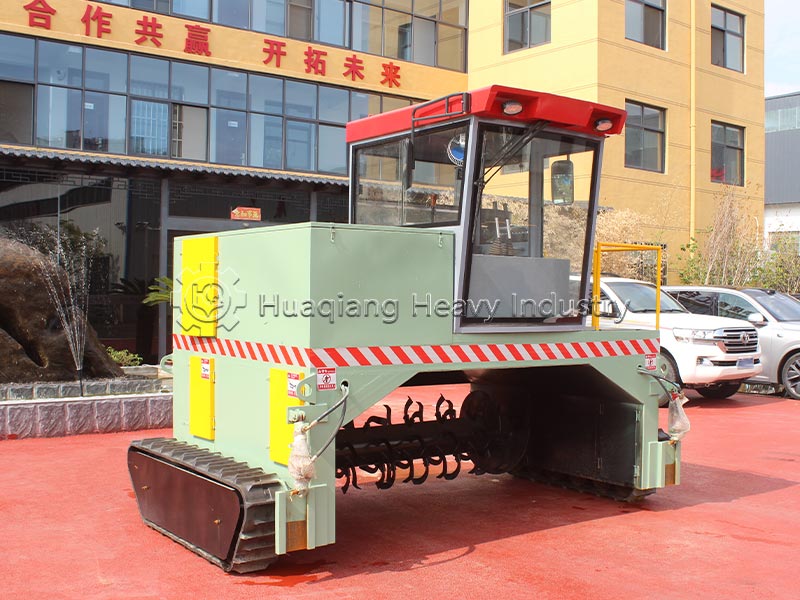
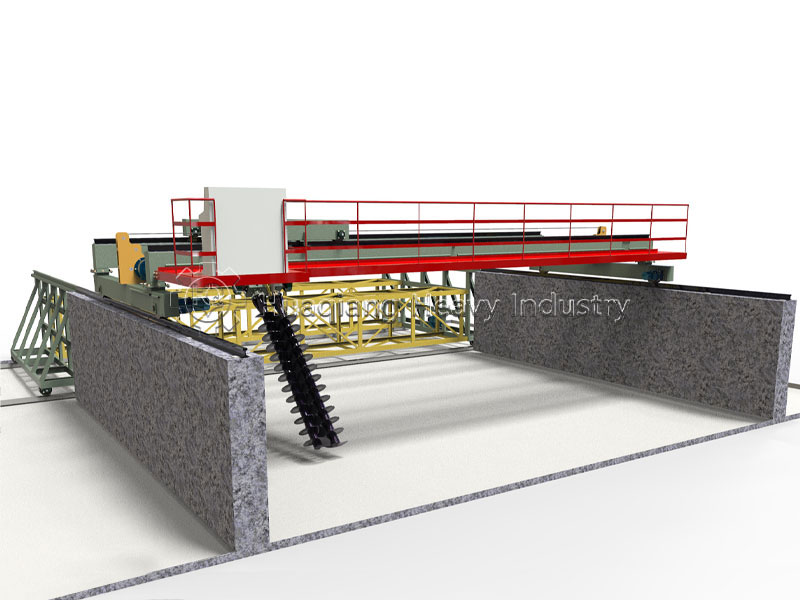
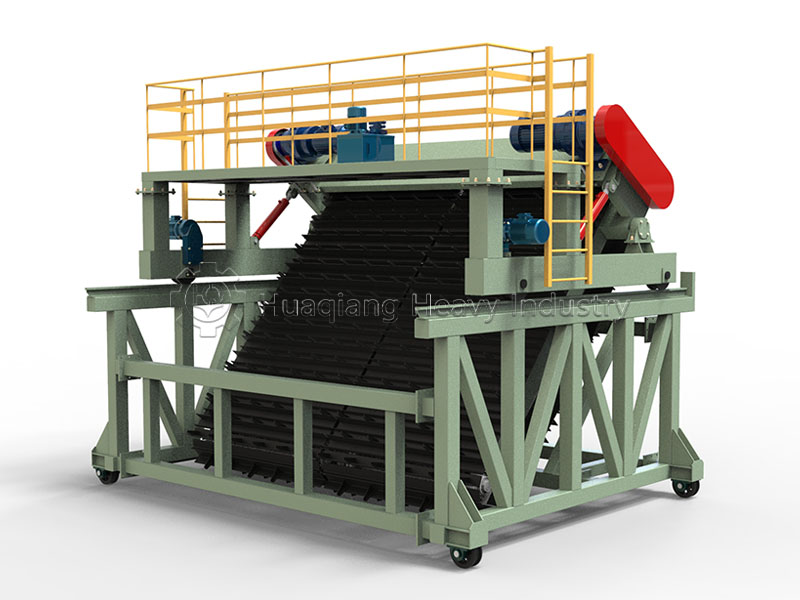
The crawler-type compost turning machine is a self-propelled machine powered by an onboard diesel engine. It straddles the windrow, using a rotating drum to lift material from the bottom and throw it to the rear as it moves forward. Designed to operate directly over the pile, the drum spans the entire width of the windrow, allowing the entire pile to be turned in a single pass. Its crawler undercarriage ensures stable movement even on soft or muddy composting sites, eliminating concerns about getting stuck or slipping. Powered by diesel, it requires no external power cables, making it suitable for use in open fields or temporary composting sites; it is particularly ideal for livestock farms and small-to-medium organic fertilizer processing facilities with modest processing volumes and average site conditions. It is easy to operate and maintain—requiring only routine tasks like lubricating bearings and inspecting the tracks and turning tines—making it a highly practical piece of self-propelled equipment for windrow composting.
Working Principle of the Crawler-Type Compost Turner
The crawler-type compost turner operates by combining a straddle-style turning mechanism with a self-propelled crawler drive. The machine straddles the windrow, with its two crawler tracks positioned on the ground on either side of the pile, powered by a diesel engine. During operation, the hydraulic system drives the crawler tracks to propel the machine slowly along the length of the windrow. A hydraulic motor drives the turning drum—located beneath the frame—to rotate at high speed; turning tines arranged in a spiral pattern on the drum cut into the base of the windrow, scooping the material upward. As the drum rotates, the material is carried to the top and thrown backward tangentially by centrifugal force, dispersing in the air before landing behind the machine. The turned material is shifted backward, resulting in a looser, more aerated pile structure. The height of the drum above the ground is adjusted via hydraulic cylinders to control the depth at which the tines cut into the material layer.
What are the operational requirements for the windrow compost turning machine?
The dimensions of the windrow must match the equipment specifications. The base width of the windrow should not exceed the effective working width of the turning drum, and the pile height should not exceed the machine’s maximum turning depth; sufficient clearance must be maintained between the top of the pile and the bottom of the machine frame. When forming the windrow, ensure it is neat and straight to facilitate straddle-type operation by the equipment.
The frequency of turning depends on the fermentation temperature. Perform the first turn one to two days after formation, once the material temperature exceeds 50°C. During the high-temperature phase, turn the pile daily to move outer material into the inner high-temperature zone, ensuring all material undergoes uniform exposure to temperatures between 50°C and 70°C. Once the temperature drops and the material enters the maturation phase, turning every two to three days is sufficient; turning too frequently accelerates heat loss, while infrequent turning leads to insufficient oxygen supply.
Position the drum correctly before starting operations. Adjust the hydraulic lifting mechanism based on the windrow height; the turning tines should cut in from the base of the windrow, maintaining a 3–5 cm gap between the tine tips and the ground. Lock the position before commencing work. Travel speed should generally start slow and increase later; fresh material has high moisture content and tends to clump, so moving slowly ensures finer turning, whereas material in the maturation phase is loose, allowing for faster travel speeds to improve efficiency.
Regarding safety: Personnel are strictly prohibited from standing in the material discharge zone behind the drum while the machine is operating, as high-speed ejected material may contain hard objects like stones. Observe the surrounding ground conditions when turning or reversing to avoid potholes and obstacles. Pay attention to the exhaust direction while the diesel engine is running and keep away from flammable materials.
How should the windrow compost turning machine be maintained?
Daily maintenance: Before starting, check the diesel engine oil level, radiator coolant level, and hydraulic oil level, topping them up as necessary. Check the crawler track tension; tracks that are too loose may derail, while those that are too tight accelerate wear. Inspect the turning tines for looseness or detachment. After shutting down, clear away any long fibrous materials wrapped around the drum and tines, as well as any adhered wet material.
Weekly maintenance focuses on lubrication. Apply grease to the drum bearings and track roller bearings once a week, wiping the grease nipples clean beforehand. Inspect hydraulic lines and fittings for leaks; tighten connections or replace seals promptly if oil seepage is detected.
Clean the diesel engine air filter weekly; composting sites are dusty, making filters prone to clogging. Check the diesel engine oil level and quality on a weekly basis. Perform a comprehensive inspection every month. Remove the turning tines to check for wear; replace them if more than one-third of the tine tip has worn away. Inspect track pads for cracks or excessive wear.
Clean or replace hydraulic oil filter elements monthly; sample and check the hydraulic oil every 500 operating hours, and replace it if the fluid turns black or milky white, or emits an unusual odor.
Inspect the hydraulic system and electrical control connections quarterly for looseness or oxidation. Perform annual maintenance on the diesel engine according to the manual, replacing the three filters (air, fuel, and oil) and the engine oil. Completely change the hydraulic fluid and clean the fuel tank. Dismantle and inspect key components of the drum and track undercarriage, replacing any parts where wear exceeds limits.
What is the investment cost of a windrow compost turning machine?
Equipment purchase costs vary based on specifications and configuration. Windrow compost turning machines integrate diesel power, hydraulic systems, and crawler drive mechanisms; their manufacturing process is more complex than that of large wheel compost turners, so for the same processing capacity, the price is usually higher. However, crawler-type compost turners do not require supporting civil engineering infrastructure, which may offer an advantage in terms of total investment.
Regarding site investment: Windrow composting sites simply need to be leveled and compacted; there is no need to pour concrete channels or lay tracks, making civil engineering costs significantly lower than those for channel-based fermentation systems. Existing open spaces can be flexibly utilized for composting, with the required area determined by processing volume; while medium-to-large projects might require the construction of rain shelters, the overall site investment remains low.
Operating costs: Diesel fuel represents the largest daily operating expense; fuel consumption during peak composting seasons—when the machine operates for several hours a day—must be factored into cost calculations. Wear parts primarily consist of the turning tines, which typically need replacement every few months to a year. Hydraulic fluid and filter elements require periodic replacement, as do worn track pads; an annual maintenance budget should be allocated. The equipment can be operated by a single person, resulting in low labor costs.