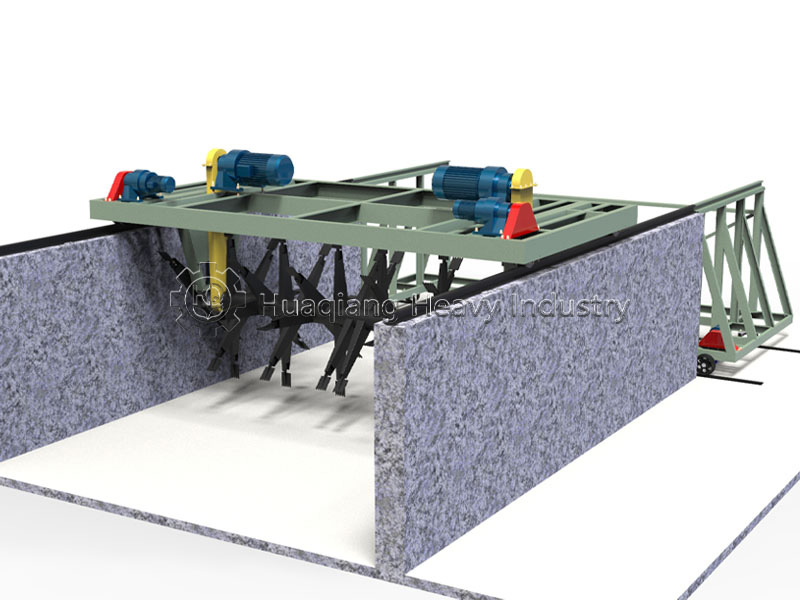
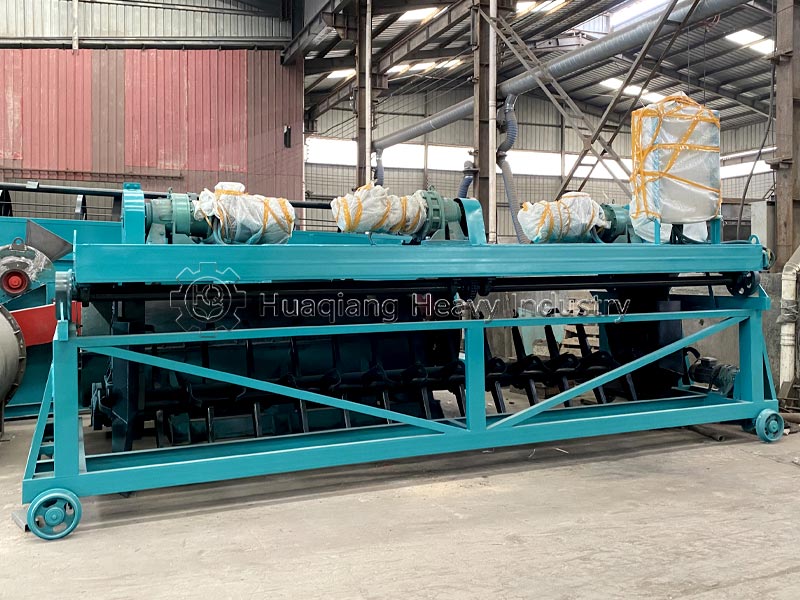
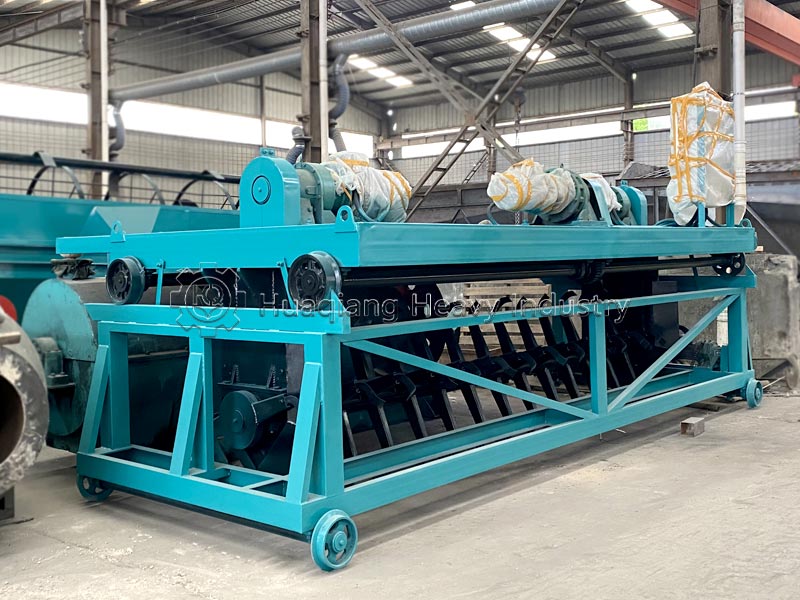
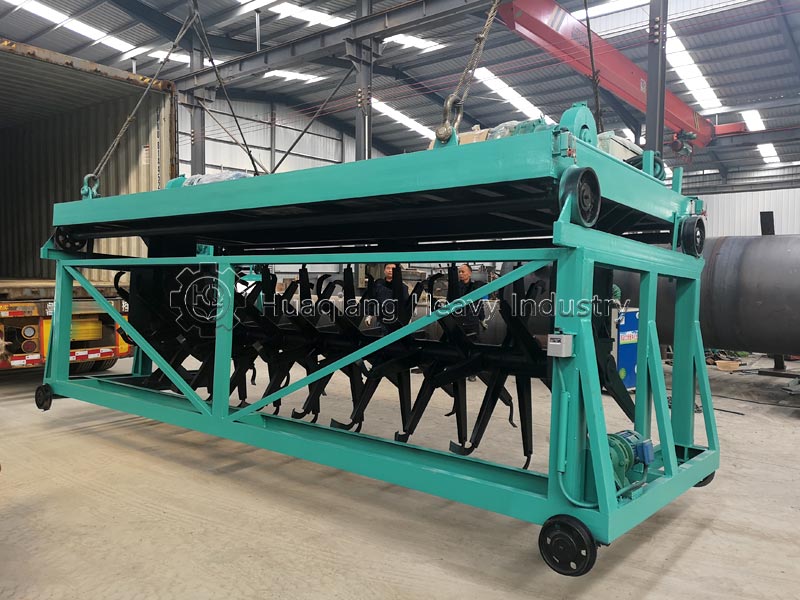
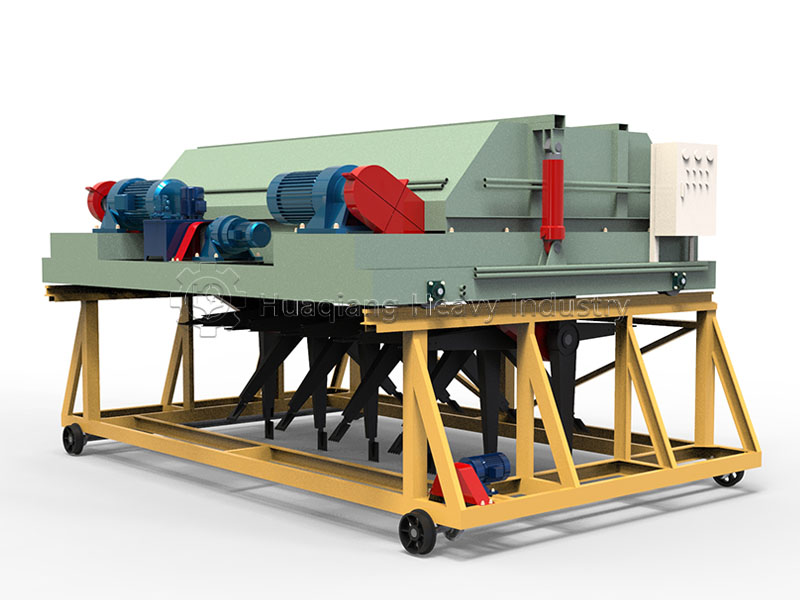
The simple trough compost turning machine is an essential piece of equipment for aerobic fermentation processes conducted in channels; it is specifically designed to periodically turn and displace organic materials piled within the fermentation channel. Mounted on rails running along both sides of the channel, the machine travels back and forth. It utilizes a rotating drum equipped with tines to break up and scatter the material while simultaneously shifting the entire mass toward the discharge end. Performing a turning operation once daily ensures adequate oxygen supply and uniform temperatures within the channel, keeping aerobic microorganisms active and rapidly decomposing organic waste—such as livestock manure and crop stalks—into high-quality organic fertilizer. Featuring a simple structure, minimal drive components, easy operation, low maintenance requirements, and low electricity costs, this machine is a practical and affordable fermentation solution for small-to-medium-sized livestock farms and organic fertilizer processing facilities.
Working Principle of the Simple Trough Compost Turning Machine
The working principle of the simple trough compost turning machine can be summarized as “turning while moving, and shifting position after turning.” The machine straddles the fermentation channel, with a travel motor driving wheels along the side rails at a constant speed via a gearbox. A main turning shaft spans the width of the channel and is fitted with multiple sets of tines arranged in a helical pattern. These tines cut into the material layer from the bottom, scooping up the material and throwing it upwards and backwards along a tangential path. After scattering in the air, the material falls back into the channel at a position shifted backward from its original location. During this process, the tines perform three key actions: breaking up and loosening compacted material to restore permeability; fully exposing the material to air to replenish oxygen for aerobic microorganisms; and swapping the positions of inner and outer material layers to redistribute heat and moisture evenly. As the turner travels the full length of the channel daily, the material gradually moves from the feed end to the discharge end while fermenting and decomposing, completing the entire fermentation cycle over the course of approximately ten to fifteen days.
What are the operational requirements for the simple trough compost turning machine?
The frequency of turning operations must be properly managed. During the initial fermentation stage, the material has high moisture content and heats up rapidly; the pile should be turned once or twice daily to ensure sufficient oxygen supply and prevent localized anaerobic conditions that cause foul odors. Once the high-temperature phase begins—characterized by vigorous material decomposition—the pile must be turned at least once a day. This process moves cooler material from the outer layers into the high-temperature inner zone, ensuring all material undergoes temperatures exceeding 50°C to effectively kill pathogens and weed seeds. In the late fermentation stage, as temperatures naturally subside, the turning frequency can be reduced to once every two or three days to consolidate the decomposition process.
The turning depth must be properly adjusted. The turning tines should reach deep into the trough but avoid direct contact with the concrete floor; a clearance of 3–5 cm between the tine tips and the floor ensures thorough mixing while preventing hard impacts that could damage the tines or the floor surface. Maintain a steady travel speed during each turning operation to avoid erratic fluctuations in speed.
Loading and unloading must be conducted systematically. Fresh material is loaded at one end of the trough, and with each turning cycle, the entire mass of material shifts backward by approximately two to three meters; fully decomposed material is then progressively removed from the opposite end. Input and output volumes should remain roughly balanced to prevent material from piling too high—which could obstruct the turning machine—or from being too sparse, which would reduce equipment utilization efficiency.
Safety protocols must be strictly observed. Personnel are prohibited from standing beneath the machine or reaching out to touch moving parts while it is in operation. When the machine changes direction at the end of the trough, monitor the limit switches to ensure they are responsive and effective, thereby preventing derailment. In the event of a power outage or equipment malfunction, promptly raise the turning spindle to its highest position to prevent the tine roller from deforming or sustaining damage due to prolonged immersion in high-temperature material.
How should a simple trough compost turning machine be maintained?
Routine maintenance: Before startup, inspect the tracks for obstructions, check that the travel wheels rotate freely, verify that the turning tines are secure, and ensure drive belts or chains have the correct tension. After shutdown, clear away any fibrous material wrapped around the tines and remove adhered wet material; if left to dry and harden, these residues can accelerate wear on the tine surfaces during the next operation. If the equipment is stored outdoors, cover the motor and electrical control box with a waterproof tarp after use. Inspect and lubricate bearings and drive components weekly.
Apply grease to the turning shaft bearings and travel wheel bearings after every week of operation; wipe dust from around the grease nipples before application to prevent contaminants from entering the bearings with the grease. Check that the gearbox oil level is within the marked range and top up with the same type of gear oil if necessary. Check the tension of drive chains weekly and apply machine oil to prevent rust and seizing.
Perform a comprehensive inspection and maintenance routine monthly. Remove the turning tines to check for wear; replace any tines where the tip wear exceeds one-third of the original length, as failure to do so reduces turning efficiency and increases power consumption. Check for even contact between the travel wheel treads and the rails; repair or replace wheels if significant wear grooves appear on the treads. Tighten all connecting bolts on the machine, especially those securing the turning tines and bearing housings; failure to promptly tighten loose bolts can lead to bolt breakage or wobbling of the tine rotor.
Check the electrical control system, limit switch operation, and motor insulation resistance quarterly. Conduct a major overhaul annually: replace bearings and travel wheels that exceed wear limits, inspect internal gearbox gears, and thoroughly inspect the frame, touching up paint to prevent corrosion.
What is the investment cost for a simple trough compost turning machine?
Equipment purchase cost. A simply configured trough-type turner—with prices varying based on channel width and power—sits at the lower end of the price range for this type of fermentation equipment. Prices increase with wider channels and higher motor power ratings.
Civil engineering investment. Fermentation channels are typically constructed from poured concrete or brickwork, with wall heights matched to the material pile height and rails laid along the bottom. Civil engineering costs depend on channel length and the number of parallel channels; a single channel 40 to 60 meters long generally meets daily processing needs. While civil engineering costs vary significantly by region due to differences in labor and material prices, this is a one-time investment with a long service life.
Operating costs primarily include electricity, replacement of wear parts, and labor. The machine has relatively low power requirements, resulting in limited electricity consumption for a daily turning cycle. The primary wear parts are the turning tines; under normal operating conditions, a set needs to be replaced every few months to a year, and the cost is low. The equipment can be operated by a single person, resulting in low labor costs.
Specifications of the Simple Trough Compost Turning Machine