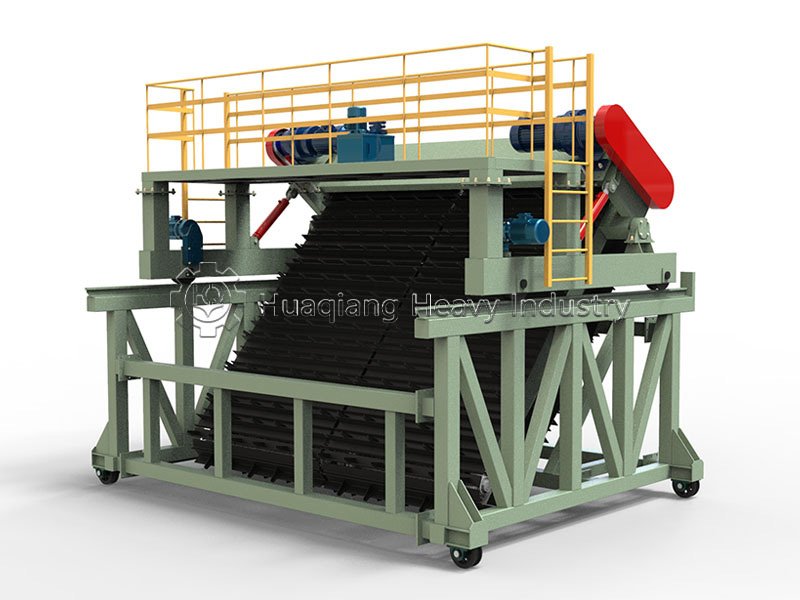
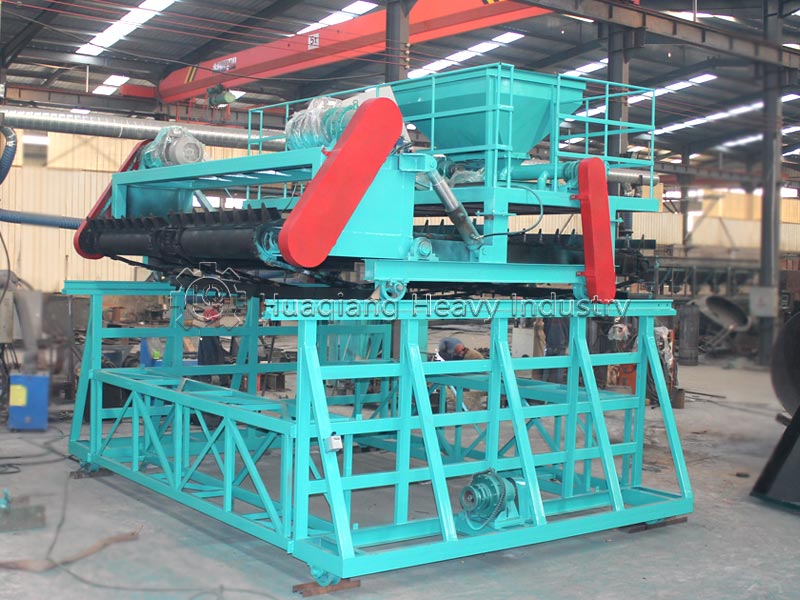
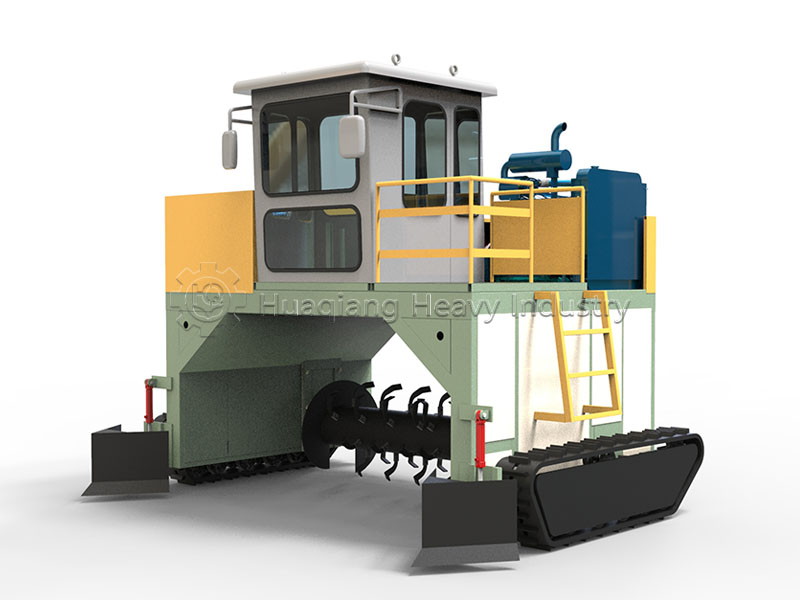
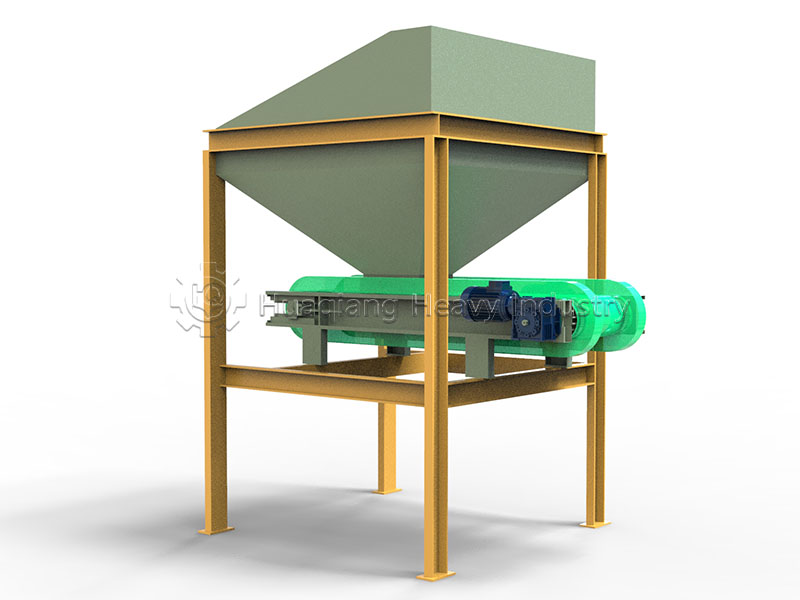
The chain compost turning machine is a device used in trough-type aerobic fermentation processes, employing a chain-driven scraper for turning the compost. It uses two ring chains to drive multiple sets of transverse scrapers, smoothly moving them through the material layer, scooping up the entire layer from the bottom of the trough, turning it over, and pushing it forward. This working method causes relatively gentle disturbance to the material, resulting in clear material layers and uniform displacement after turning. It is particularly suitable for processing mixtures with high straw content and long fibers. The scraper pushing method prevents tangling and ensures smooth operation. The equipment has a simple structure; the chain and scrapers are common wear parts, making replacement convenient and inexpensive. For small to medium-sized trough composting projects, the chain compost turner is a practical turning equipment that turns deeply, is economical to use, and requires minimal maintenance.
What is the fermentation process of the chain compost turner?
Raw material preparation and loading into the trough: Livestock manure is mixed evenly with crushed straw, rice husks, and other auxiliary materials according to the formula ratio, adjusting the moisture content to 55%~65% and the carbon-nitrogen ratio to 25:1~30:1. The mixed materials are loaded into the fermentation tank from the feed end by a loader and piled to the designed height allowed by the equipment, with a roughly flat surface. After loading, the materials are in a natural stacking state, and aerobic microorganisms begin to proliferate inside.
Heating and High-Temperature Turning: 24 to 48 hours after the materials enter the tank, the temperature inside the tank naturally rises to above 50°C. At this time, the chain turner starts and moves slowly along the track in the tank. The turning chain drives scrapers to circulate in the material layer, scooping up the entire layer of material from the bottom of the tank. After the chain travels to a certain height, the material flips backward and falls, with the landing point moving a fixed distance towards the discharge end. After turning, the material is loose and breathable, oxygen is fully replenished, and the tank temperature quickly returns to the high-temperature range after a brief drop.
Repeated Turning and Maturation: During the high-temperature period, the material is turned once or twice a day for 7 to 10 days, maintaining the tank temperature at 50-70°C. After the high-temperature period, the temperature gradually decreases, entering the maturation period, and the frequency of turning is reduced to once every two to three days. The material moves evenly towards the discharge end during each turning, completing the entire length of the trough in 15 to 20 days. The material discharged from the discharge end is fully decomposed organic fertilizer, ready for subsequent crushing, screening, and granulation processes.
What raw materials can a chain compost turning machine ferment?
Livestock and poultry manure. Chicken manure is high in nitrogen and heats up quickly, resulting in good fermentation when mixed with straw. Pig manure has high moisture content and is prone to clumping; after mixing with dry auxiliary materials, the scraper turning process breaks up any clumps. Cow manure has high fiber content and a loose texture; the scraper pushes the material without tangling, ensuring smooth operation. Sheep manure has small particles and good aeration, and can be fermented alone or in combination with other materials.
Agricultural crop straw. Corn straw, rice straw, and wheat straw are crushed and mixed with manure before being added to the trough. The scraper turning method has high tolerance for fiber length, so the straw does not need to be crushed too finely before being added. Harder, less biodegradable auxiliary materials such as rice husks, peanut shells, and sugarcane bagasse are also suitable.
After being removed from their bags and broken up, edible mushroom substrate is placed in fermentation tanks. The loose substrate residue is easily mixed with manure by scrapers and turning it over. Garden twigs, fallen leaves, and grass clippings are bulky and have long fibers; the gentle pushing method of chain-type turning ensures good processing and prevents tangling and jamming.
Industrial organic waste such as sugar factory filter mud, distiller’s grains, and traditional Chinese medicine residue, as well as biogas residue from biogas projects and dewatered sludge from urban sewage treatment plants, can also be harmlessly and resourcefully treated through chain-type compost turning machine tank fermentation after being mixed with dry auxiliary materials such as straw to adjust moisture content.
What are the requirements for fermentation raw materials for chain compost turning machines?
Moisture control. The optimal moisture content of the materials entering the tank is 55%–65%. A visual standard is that the material can be formed into a clump when squeezed by hand, and water should seep out between the fingers but not drip. If the moisture content is too high, the material will be sticky and wet, increasing the resistance of the scrapers and reducing aeration, easily leading to anaerobic digestion. If the moisture content is too low, microbial activity will be limited, and the temperature will rise slowly. Fresh manure typically has a high moisture content and needs to be mixed with dry additives such as straw powder and rice husks to adjust it to a suitable range.
The carbon-to-nitrogen ratio needs to be adjusted to 25:1~30:1. Manure is rich in nitrogen, while straw is rich in carbon; mixing the two ensures a balanced nutritional intake for microorganisms. A carbon-to-nitrogen ratio that is too high prolongs the fermentation cycle and results in incomplete decomposition, while a ratio that is too low leads to nitrogen loss through ammonia volatilization and a pungent odor in the workshop.
Regarding material fineness, long-fiber materials such as straw should be crushed to below 10 cm. Chain compost turners have a high tolerance for fiber length, but excessively long fibers may still clump together during scraper operation, affecting the uniformity of turning. The material should not contain large hard objects; stones, metal parts, and other impurities entering the trough can clog the scrapers or damage the chain. Screening and iron removal should be performed before feeding.