

Although their names are similar, organic fertilizer and bio-organic fertilizer represent two distinct approaches to fertilizer production lines. The former relies on “visible” organic matter and primary nutrients (nitrogen, phosphorus, and potassium—NPK), while the latter incorporates an additional, “invisible” element: the power of living microorganisms.
Organic Matter and NPK: While bio-organic fertilizers may have slightly lower levels of organic matter and NPK, this is not a disadvantage. Standard organic fertilizers typically contain at least 45% organic matter and a minimum of 5% total NPK. Bio-organic fertilizers, due to the inclusion of functional microbes and carrier materials, often have slightly lower concentrations of organic matter and total nutrients; industry standards require at least 40% organic matter and a viable microbial count of at least 20 million (0.02 billion) CFU per gram. On paper, bio-organic fertilizers may appear less impressive in terms of raw nutrient content, but their true value does not lie in providing immediate, readily available nutrients.
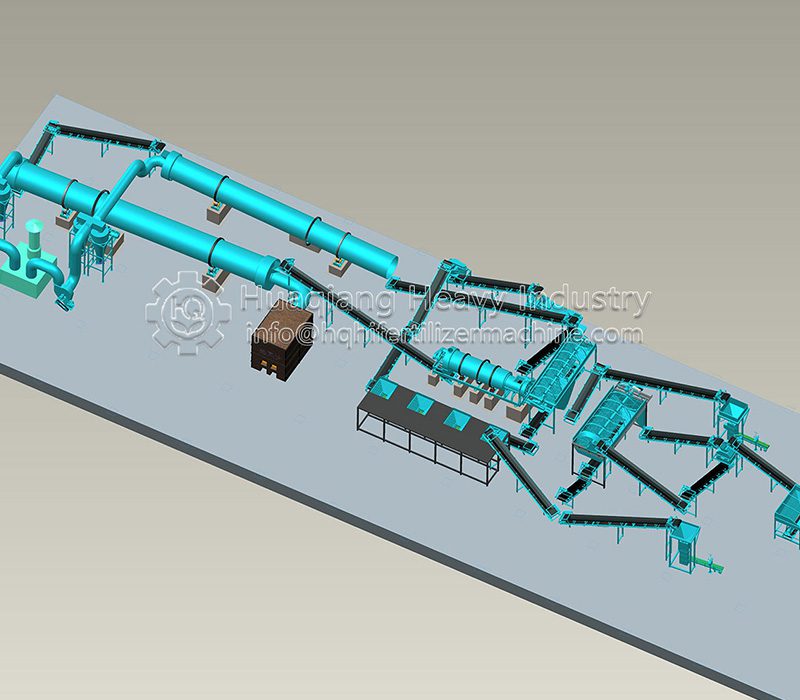
Living Microbes as a Key Value-Add: Bio-organic fertilizers are enriched with functional microorganisms—such as nitrogen-fixing, phosphorus-solubilizing, or potassium-solubilizing bacteria, as well as microbes that antagonize pathogens. Once introduced into the soil, these living microbes can fix atmospheric nitrogen (which crops cannot utilize directly) and release otherwise insoluble phosphorus and potassium, effectively establishing a “micro-fertilizer factory” within the rhizosphere (the root zone). Conventional organic fertilizers lack this capability.
Different Modes of Action: Conventional organic fertilizers function primarily as “soil conditioners,” using their organic matter content to improve soil structure and enhance water and nutrient retention. Bio-organic fertilizers go a step further: their living microbes secrete organic acids and antibiotic-like substances that suppress soil-borne diseases and stimulate root growth—a benefit particularly effective for land suffering from “continuous cropping obstacles” (soil fatigue).
Choosing the Right Option: For soil that is severely compacted—where the primary goal is to build soil fertility—conventional organic fertilizers offer excellent value. Conversely, if the soil is prone to soil-borne diseases and the objective is to promote growth while preventing disease, bio-organic fertilizers are the more targeted solution. When conditions permit, using them in combination—applying conventional organic fertilizer to improve the soil base, followed by bio-organic fertilizer to introduce beneficial microbes—often yields better results than using either product alone.