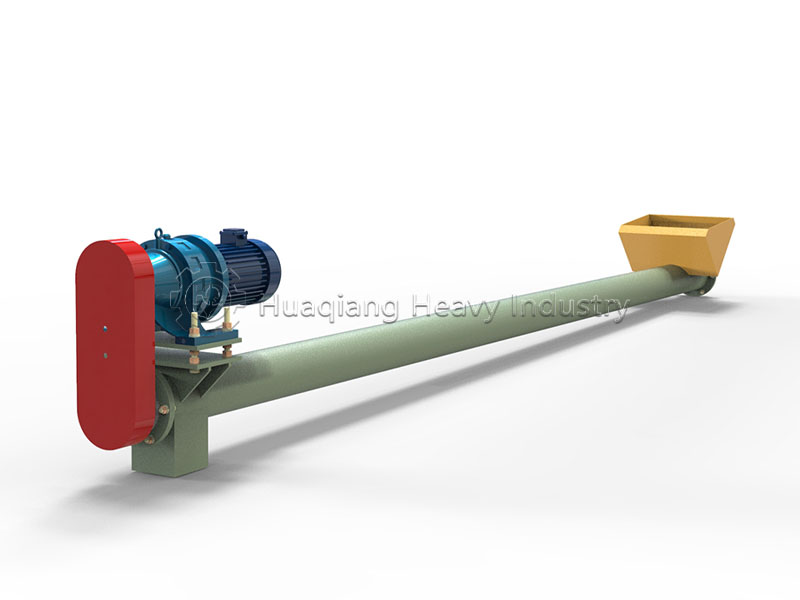
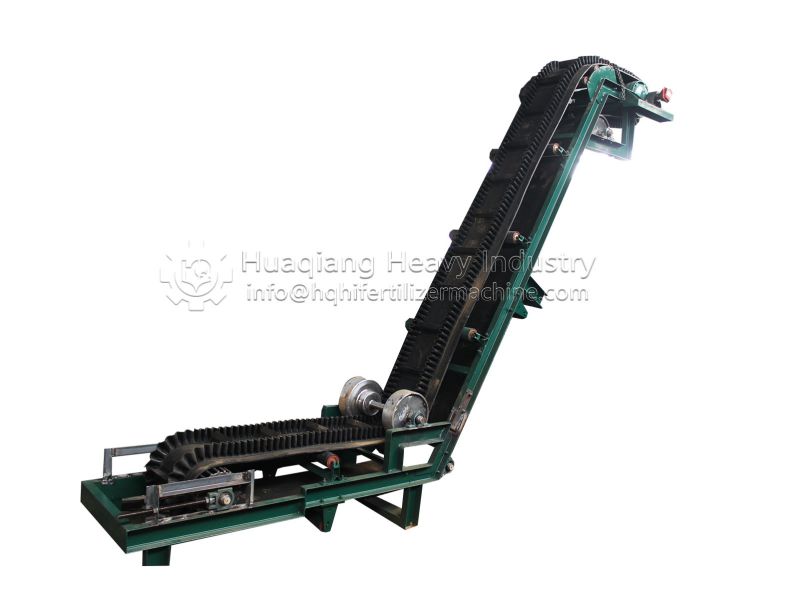
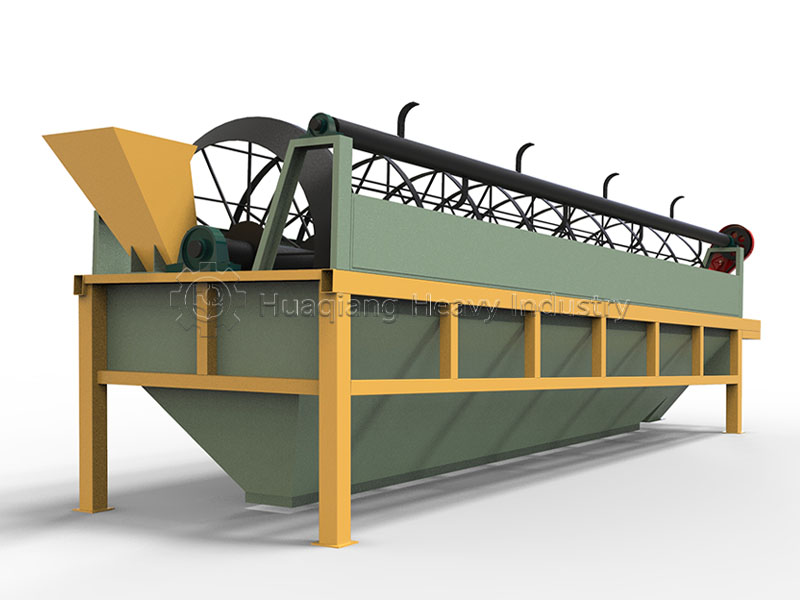
Screw conveyors are widely used in the fertilizer industry to transport corrosive and abrasive materials. Fermented organic fertilizer contains organic acids and moisture, which are corrosive to equipment; raw materials for compound fertilizers—such as urea and ammonium phosphate—contain salts that corrode metal. These conveyors can be manufactured from materials like stainless steel or wear-resistant steel based on material properties, ensuring durable flights and troughs. The equipment features sealed conveying to prevent spillage, operates smoothly with low noise, and serves as a reliable, durable transfer unit in fertilizer production lines.
Working Principle
The screw shaft rotates within the trough, and the flights push the material to move axially. There is minimal relative movement of the material during transport, resulting in relatively uniform friction and wear on the flights and trough walls. Continuous rotation of the flights drives the material forward uninterruptedly, ensuring a stable and controllable conveying rate. A variable-pitch design—featuring a larger pitch at the inlet and a smaller pitch at the outlet—can compress the material, providing both conveying and dewatering functions.
Performance Features
Material Options: Carbon steel, stainless steel, or wear-resistant alloy flights can be selected based on material corrosiveness and abrasiveness.
Sealed and Eco-friendly: Fully enclosed conveying prevents dust and odor leakage, ensuring environmental friendliness.
Wear Resistance and Long Life: Flights can be hard-faced with wear-resistant layers or fitted with wear-resistant liners to extend service life.
Smooth Conveying: Operates at low speed with high torque; material remains intact without segregation or breakage.
Reliable Operation: Simple structure with few failure points; requires minimal maintenance.
Maintenance Methods
Check the inlet and discharge ports for material blockages every shift; clean accumulated dust from the trough exterior.
Check the wear status of the screw flights weekly; replace flights or repair wear-resistant layers via welding if edges show severe wear.
Check lubrication of hanger bearings and end bearings monthly; replenish grease as needed.
Check the gearbox oil level and coupling elastomer wear quarterly.
Check screw shaft straightness during the annual overhaul; straighten or replace the shaft if bending exceeds limits. Regularly inspect seals to prevent dust from entering the bearings.