

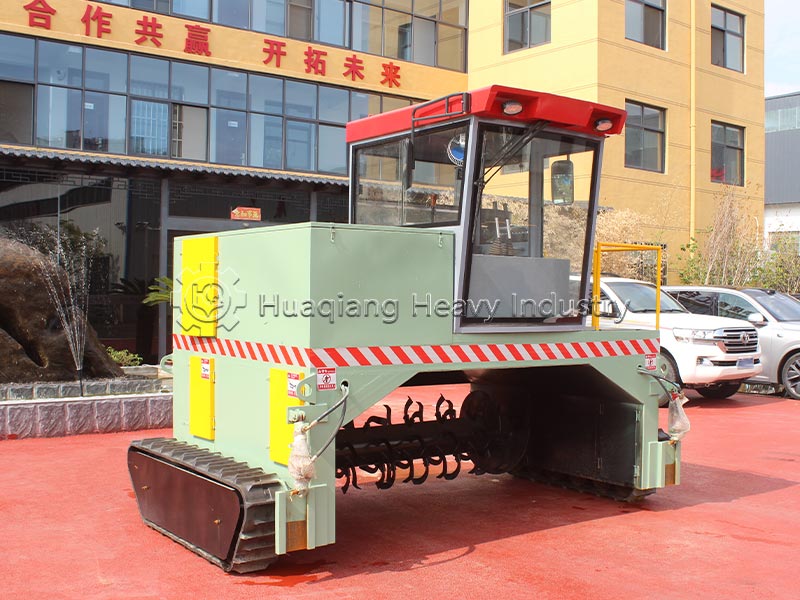
Composting is now popular worldwide, thanks to its multiple practical values and the support of organic fertilizer production lines and equipment. Among these, the organic fertilizer compost turning machine is the core equipment for large-scale composting, driving the transition from traditional manual methods to standardized production.
The most fundamental value of composting is the resource utilization of waste. Straw, kitchen waste, and livestock manure, after pretreatment by fertilizer production equipment, are accelerated through fermentation by the organic fertilizer compost turning machine, transforming into high-quality organic fertilizer. This turns waste into treasure, reducing pollution at the source and aligning with the concept of ecological recycling.
Compost plays an irreplaceable role in soil improvement. Compost processed according to standardized organic fertilizer production lines is rich in organic matter, improving soil compaction, enhancing aeration, water retention, and fertilizer retention capacity, activating soil nutrients, revitalizing barren soil, and adapting to various planting scenarios.
It is also a key support for green planting. Well-rotted compost is mild and non-irritating. After precise processing by fertilizer production equipment, its nutrients are more balanced, providing nourishment to crops while inhibiting harmful pathogens, reducing the use of pesticides and fertilizers, and contributing to the production of green agricultural products.
Economically, composting is inexpensive. Combined with organic fertilizer compost turning machines for large-scale production, fertilizer costs can be significantly reduced, while increasing the yield and quality of agricultural products. With its advantages of environmental protection, soil improvement, quality enhancement, and cost reduction, coupled with the support of professional equipment, composting has become a globally recognized ecological solution.