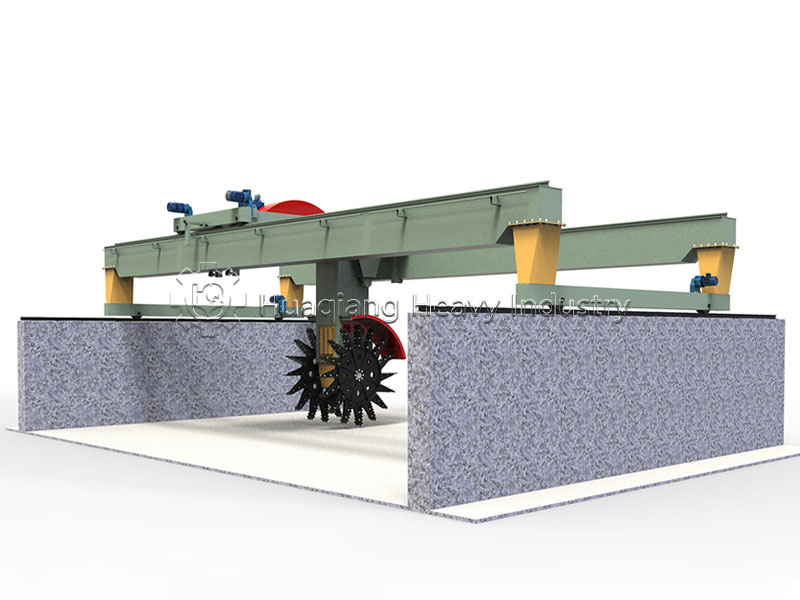
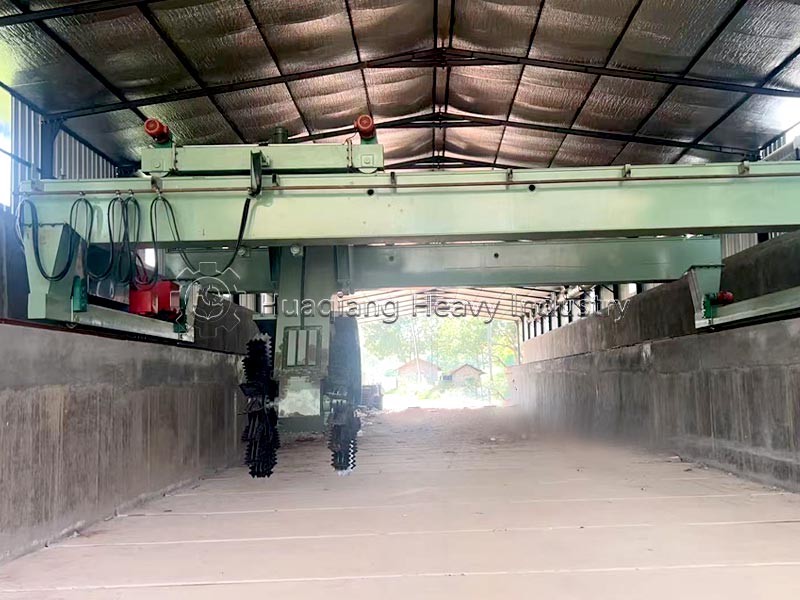
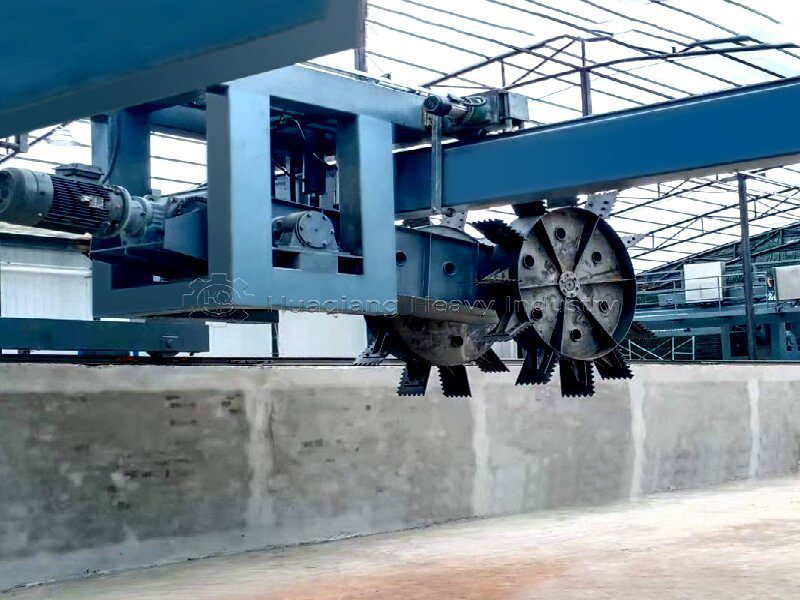
The large wheel compost turning machine is a common piece of equipment used in windrow composting processes. It features one or two large-diameter rotating wheels as its core turning components and operates directly on windrow-shaped material piles. Equipped with its own drive mechanism, it requires no pre-laid tracks or fixed fermentation tanks; site requirements are minimal, as it can operate on any level, hardened surface. During operation, the machine moves automatically along the length of the windrow; the turning tines on the wheels scoop material from the bottom and cast it backward, breaking up clumps and increasing aeration while simultaneously shifting the entire pile backward. For small-to-medium-sized livestock farms and township-level organic fertilizer processing centers, the large wheel compost turning machine strikes an excellent balance between flexibility and cost-effectiveness, offering a simple, practical solution for aerobic windrow composting.
What is the fermentation process involved with the large wheel compost turner?
In the preparation stage, livestock manure is mixed with bulking agents—such as straw or rice husks—in specific proportions, and the moisture content is adjusted to an optimal range. The mixture is then piled on the ground into long windrows with a trapezoidal or triangular cross-section; the pile height and width are determined by the machine’s turning capacity.
Once fermentation begins, aerobic microorganisms within the material multiply rapidly and generate heat, causing the pile temperature to rise above 50°C within two days. At this point, the large wheel compost turning machine begins operation, moving along the windrow; the rotating wheels cut into the base of the pile, and the tines scoop up the material and cast it backward. As the material disperses in the air and settles back onto the pile, the entire pile shifts backward. This process replenishes oxygen and moves cooler material from the outer layers into the high-temperature inner zone, ensuring the entire pile undergoes the high-temperature phase uniformly.
The turning frequency is adjusted according to the fermentation stage. During the high-temperature phase, the pile is turned daily to maintain temperatures between 50°C and 70°C for 7 to 10 days, effectively killing pathogens and weed seeds. During the maturation phase, the frequency is reduced to once every two or three days. After 15 to 20 days of turning operations, the material gradually moves from one end of the windrow to the other; once fully matured, it serves as organic fertilizer feedstock for subsequent processing stages.
What raw materials can the large wheel compost turning machine process?
The large wheel compost turner is compatible with aerobic composting processes and can handle a wide range of organic materials common in agriculture and livestock farming.
Livestock and poultry manure—including chicken, pig, sheep, cattle, duck, and goose manure—are the primary materials processed. Since different manures vary in moisture and fiber content, the turner’s powerful throwing action effectively breaks up clumpy pig manure and shreds fibrous cattle manure to loosen it.
Crop stalks and agricultural processing by-products are also major feedstocks. Corn, rice, and wheat stalks are shredded and mixed with manure for composting; materials like rice husks, peanut shells, sugarcane bagasse, and spent mushroom substrate help adjust moisture levels while increasing the organic matter content of the finished fertilizer.
Landscaping waste—such as wood chips, fallen leaves, and grass clippings—is bulky and loose in texture; the large wheel compost turner handles these efficiently due to its wide working span. Sorted kitchen waste and fruit/vegetable scraps can also be shredded and mixed with dry bulking agents for windrow composting.
Industrial organic by-products—such as spent grains (from brewing or vinegar production), sugar mill filter mud, herbal medicine residues, and biogas digestate—can also undergo high-temperature aerobic fermentation using the large-wheel turner, provided moisture levels and carbon-to-nitrogen (C/N) ratios are properly adjusted.
What are the requirements for composting raw materials when using a large wheel compost turner?
Moisture control. The optimal moisture content for materials entering the pile is 55%–65%. A simple field test involves squeezing the material by hand: it should form a clump, and while moisture may appear between the fingers, it should not drip. Excessive moisture reduces permeability, leading to anaerobic conditions and odor; insufficient moisture limits microbial activity and slows down the temperature rise. If fresh manure has high moisture content, dry bulking agents like powdered stalks or rice husks can be added to adjust it.
The carbon-to-nitrogen (C/N) ratio is a critical factor influencing microbial metabolic efficiency; the ideal range is between 25:1 and 30:1. Livestock and poultry manure typically has a high nitrogen content and requires the addition of high-carbon materials—such as straw or rice husks—to achieve a balanced mix. An excessively high carbon-to-nitrogen (C/N) ratio prolongs the fermentation cycle, while a ratio that is too low leads to nitrogen loss through ammonia volatilization, thereby reducing the nutrient content of the organic fertilizer.
Material particle size should be moderate. Long-fiber materials like straw should be chopped to lengths of less than 10 cm; pieces that are too long can tangle around the turning rotors and increase the load on the machine. However, excessive pulverization should be avoided, as retaining some fiber length helps maintain the pile’s porous structure and air permeability.
Non-degradable debris—such as large stones, metal objects, and plastics—must be strictly excluded from the raw materials. Such hard objects can impact and abrade the turning tines, potentially causing them to break. Screening and removing impurities from the raw materials prior to composting is essential for protecting the equipment and ensuring a smooth fermentation process.
What is the processing capacity of the large wheel compost turning machine?
The capacity of the large-rotor turner is directly related to its turning width, turning depth, and travel speed; different models are available to meet processing requirements ranging from a few tons to several tens of tons of compost per day.