

In the core process of the bio-organic fertilizer production line, the new type organic fertilizer granulator, as a key piece of bio-organic fertilizer equipment, requires special attention to the caking problem that occurs during granulation. By identifying the root causes and making scientific adjustments, this problem can be effectively solved. The following are some practical techniques:
First, strictly control the raw material pretreatment process. Excessive raw material moisture content is one of the core reasons for caking. If the organic fertilizer raw materials have a high moisture content, they are prone to sticking together during granulation. It is recommended to use a drying device to control the moisture content of the raw materials between 25% and 35%. Alternatively, the moisture content can be adjusted by adding an appropriate amount of dry auxiliary materials (such as straw powder or peat). At the same time, screening equipment should be used to remove impurities and large hard lumps from the raw materials to prevent localized caking.
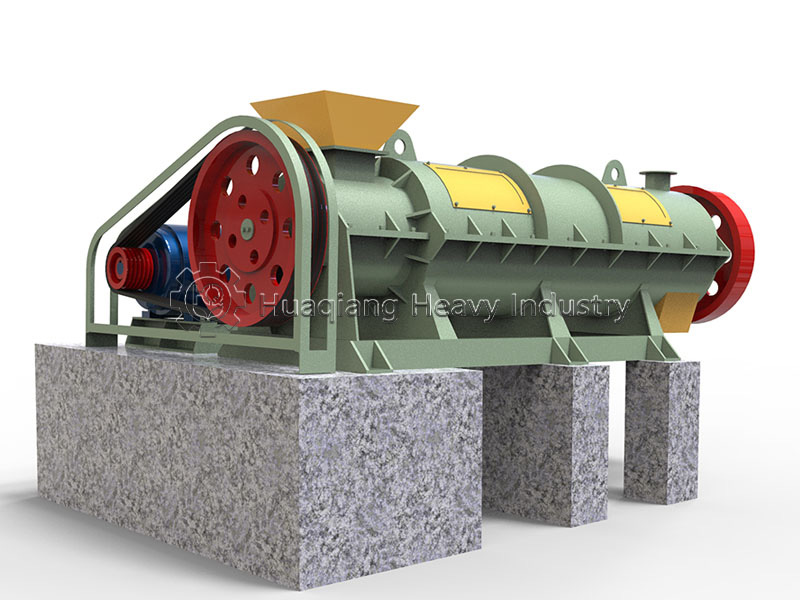
Secondly, adjust the operating parameters reasonably. Different models of new type organic fertilizer granulators have different requirements for rotation speed and pressure. Too fast a rotation speed can lead to excessive compression and caking of the material, while too slow a speed will prevent the formation of qualified granules. The main shaft speed and granulation pressure of the granulator should be gradually adjusted according to the characteristics of the raw materials to ensure uniform mixing and appropriate compression of the material in the chamber.
Finally, optimize the production environment and post-processing. High humidity in the production workshop will accelerate moisture absorption and caking of the granules. It is recommended to keep the workshop ventilated and dry, and to equip it with dehumidification equipment if necessary. After granulation, the granules should be promptly sent to cooling and screening equipment. Air cooling should be used to reduce the temperature of the granules, and the large lumps of caked material should be screened out to prevent them from accumulating and sticking together.
Through the above targeted adjustments, the granulation and caking problems of the new type organic fertilizer granulator can be effectively solved, ensuring the stable operation of the bio-organic fertilizer equipment and the continuity of the bio-organic fertilizer production line, and improving product quality.