

The superior properties of water-soluble fertilizers stem from meticulous processing, with the core focus on ensuring nutrient purity, solubility, and uniformity. Compared to traditional fertilizers, their processing demands higher standards for raw materials, formulation, and manufacturing processes. The rational use of key equipment such as fertilizer screener machines, fertilizer mixers, and fertilizer packing machines is crucial for efficient processing and quality assurance.
Raw material selection is the first line of defense. High-purity, easily soluble raw materials must be selected to prevent impurities from affecting quality. Fertilizer screener machines are used to remove impurities and large particles, while simultaneous drying and impurity removal processes reduce moisture content, preventing moisture absorption and caking, thus laying the foundation for subsequent processing.
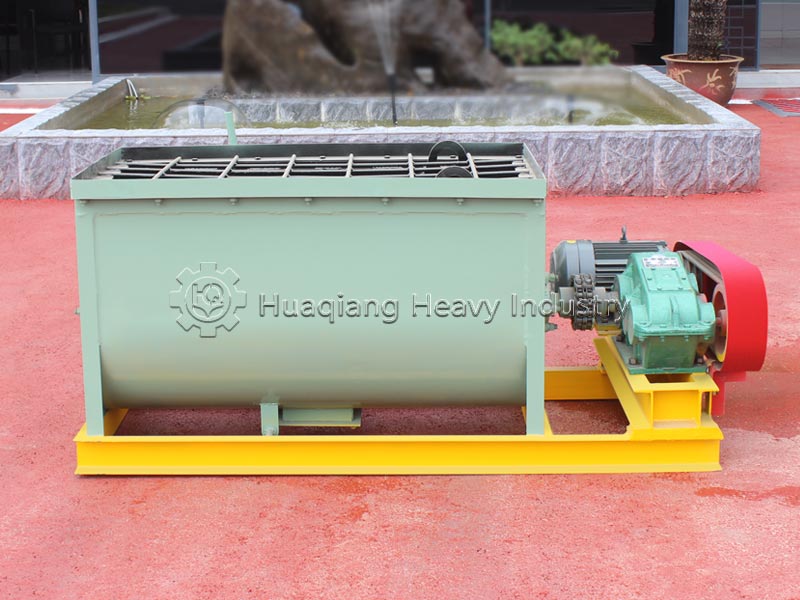
Precise formulation and uniform mixing are core aspects. After accurately weighing the raw materials according to crop needs, they are fed into a fertilizer mixer for thorough mixing to prevent uneven nutrient distribution; powdered water-soluble fertilizers can be further refined using a fertilizer screening machine to improve dissolution speed; liquid water-soluble fertilizers require controlled mixing parameters to ensure complete nutrient dissolution.
Finished product testing and packaging are the final stages. After passing quality control, the product is packaged using a fertilizer packaging machine. Moisture-proof and sealed packaging materials are used to protect quality and prevent moisture absorption and deterioration during transportation and storage. Key information such as nutrient ratios and usage instructions are also included to provide guidance for subsequent use.