

In organic fertilizer production, crushing pretreatment and fermentation turning are core pre-processing steps. Many manufacturers wonder about the compatibility of cage fertilizer crushers and organic fertilizer compost turning machines. In fact, the two machines have clear divisions of labor and strong complementarity, making them a classic combination in organic fertilizer production lines.
The processes of the two machines flow smoothly. The cage crusher, as the front-end pretreatment equipment, is mainly used to solve the problem of uneven material fineness. The organic fertilizer compost turning machine is responsible for the subsequent fermentation process, turning and aerating the pretreated material, dissipating heat, and ripening it. The processes are closely connected, ensuring a smooth and stable production chain.
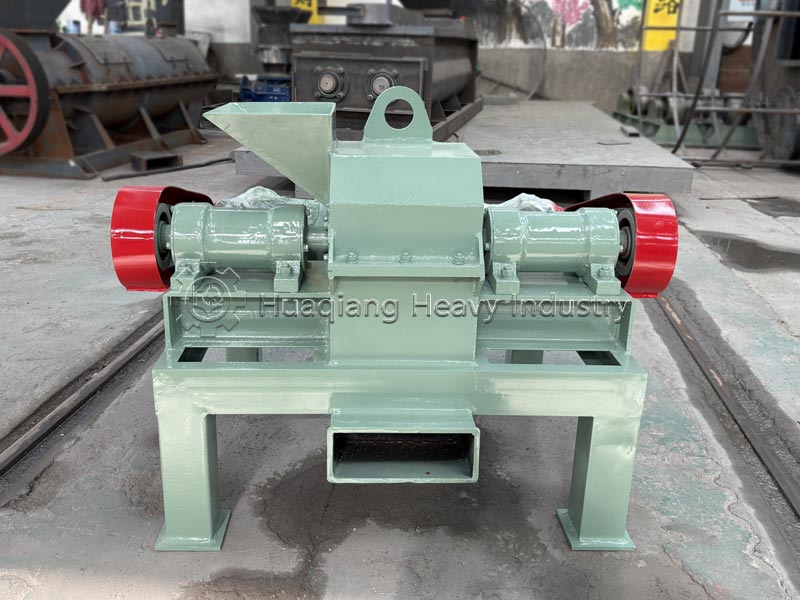
The equipment combination can significantly optimize fermentation quality. Uncrushed raw materials have large clumps and poor permeability, easily creating fermentation dead zones during turning, leading to uneven ripening and prolonged production cycles. Materials refined by the cage fertilizer crusher have higher porosity and significantly improved permeability, resulting in more uniform turning operations and sufficient material contact with oxygen, thus accelerating ripening efficiency.
Furthermore, the two equipment operate at highly compatible paces, facilitating convenient maintenance. The cage crusher is less prone to clogging and ensures a stable and continuous material supply; the finer material reduces the workload on the compost turner, minimizing equipment malfunctions. Both small-to medium-sized production lines and large-scale operations can achieve efficient, coordinated operation.
In summary, the cage fertilizer crusher and organic fertilizer compost turning machine are a highly compatible combination. Pre-crushing optimizes material properties, while post-composting ensures optimal fermentation. These two processes complement each other, making it an excellent equipment combination for improving the quality, efficiency, and stable production of organic fertilizer.