

The key to controlling costs in a small-scale organic fertilizer production line lies in eliminating non-essential equipment. There is no need to blindly replicate the configurations used in large-scale facilities; by judiciously removing redundant machinery—provided that product quality remains uncompromised—initial capital investment can be significantly reduced.
First, large-scale drying equipment can often be omitted. If the raw materials have low moisture content, or if the production site offers ample space for air-drying, natural drying methods alone may suffice to meet moisture requirements. This eliminates the need to invest in large drying units, thereby saving on equipment costs while simultaneously reducing energy consumption.
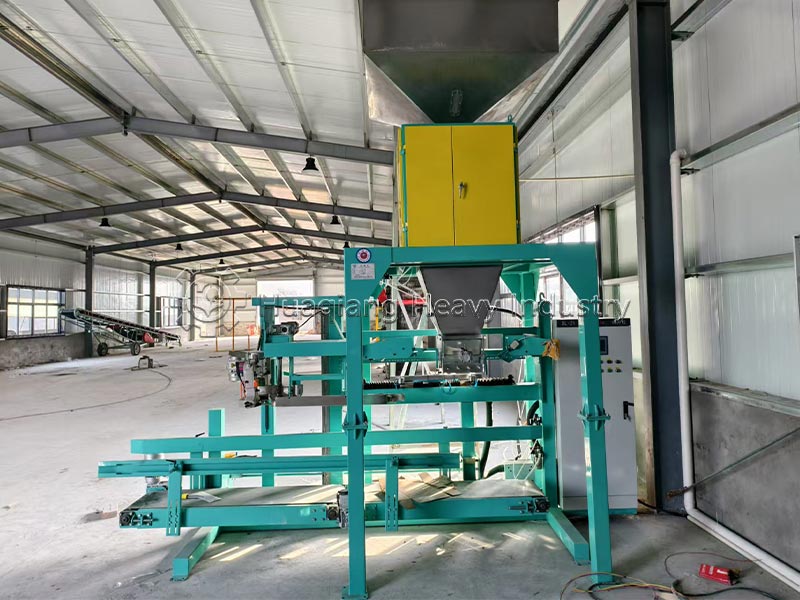
Second, automatic packaging machines can be dispensed with. Given the limited output capacity of a small-scale production line, manual packaging is entirely adequate to meet operational needs. The cost of manual sealing and weighing equipment is substantially lower than that of automatic packaging machines; furthermore, manual methods offer greater operational flexibility, making them an ideal choice for cost-conscious startups.
Additionally, high-end analytical and testing equipment can be temporarily deferred. Small-scale production typically does not require high-precision analysis; simple tools are sufficient to monitor key parameters such as material moisture content and particle size. More sophisticated testing equipment can be gradually introduced as the scale of production expands.
It is crucial to note that any equipment reductions must be undertaken without compromising product quality; core machinery—such as crushing, fermentation, and granulation units—must not be omitted. By judiciously eliminating non-essential equipment, a small-scale organic fertilizer production line can achieve low-cost, high-efficiency operation.