

Many people mistakenly believe that compost must smell bad. In fact, high-quality compost only emits a faint earthy smell. A pungent odor, such as putrid or ammonia-like smell, is caused by improper preparation. Composting is essentially the aerobic decomposition of organic matter by microorganisms. With proper methods, odorless composting can be achieved. However, improper handling can lead to anaerobic fermentation and nutrient imbalance, resulting in unpleasant odors.
Key errors include: 1. An imbalanced carbon-nitrogen ratio: Too much nitrogen and too little carbon causes microorganisms to decompose too quickly, releasing large amounts of ammonia and producing a pungent smell. 2. Insufficient ventilation: Overly compacted piles or untimely turning create an anaerobic environment, producing hydrogen sulfide and other substances that emit a putrid odor. 3. Uncontrolled humidity: Too high humidity causes material to clump together and poor ventilation, while too low humidity reduces microbial activity, leading to spoilage and unpleasant odors.
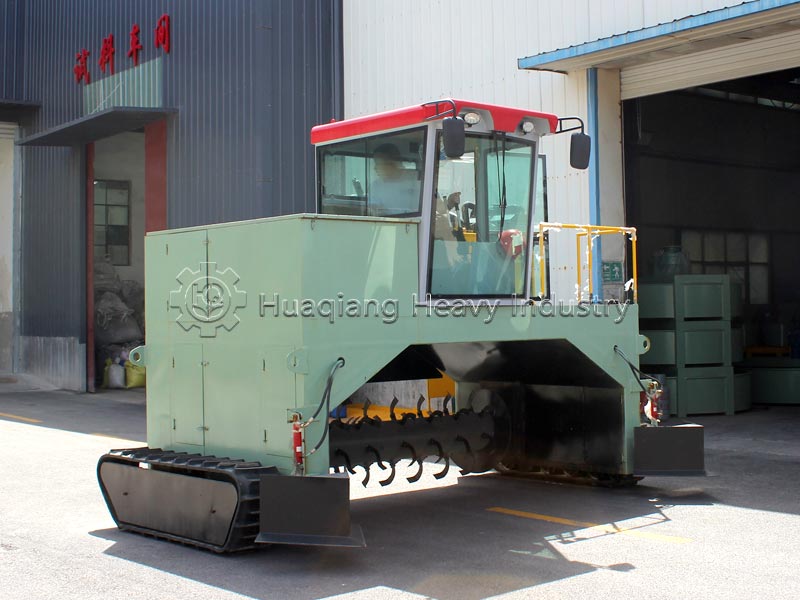
The correct method can completely eliminate odors. Using a carbon-to-nitrogen ratio of 25:1 to 30:1, compost is regularly turned using organic fertilizer composting equipment such as windrow compost turning machines. Large-scale production relies on organic fertilizer production lines, precisely controlling the turning frequency, ratio, and humidity to ensure an aerobic environment throughout the process. Maintaining the compost’s moisture content at 55%-60%, combined with composting microbial agents to accelerate decomposition, reduces odor.
In summary, compost odor is not an inherent characteristic but rather a warning sign of operational errors. By controlling the three key aspects of raw materials and employing scientific turning methods, odorless composting can be achieved.