

The production of high-quality organic fertilizer relies not only on complete organic fertilizer production equipment but also on standardized operations throughout the entire process. Many manufacturers have complete equipment configurations, yet the quality of their finished products varies greatly, mainly due to a lack of control over production details.
Raw material pretreatment is the foundation of quality. Before production, raw materials must be thoroughly screened to remove impurities such as stones and plastics, avoiding interference with subsequent equipment operation and fertilizer quality. Simultaneously, the moisture content and carbon-nitrogen ratio of the raw materials must be precisely controlled, adjusting the proportions according to the actual state of the materials to solve the problems of excessive moisture causing caking and excessive dryness hindering decomposition.
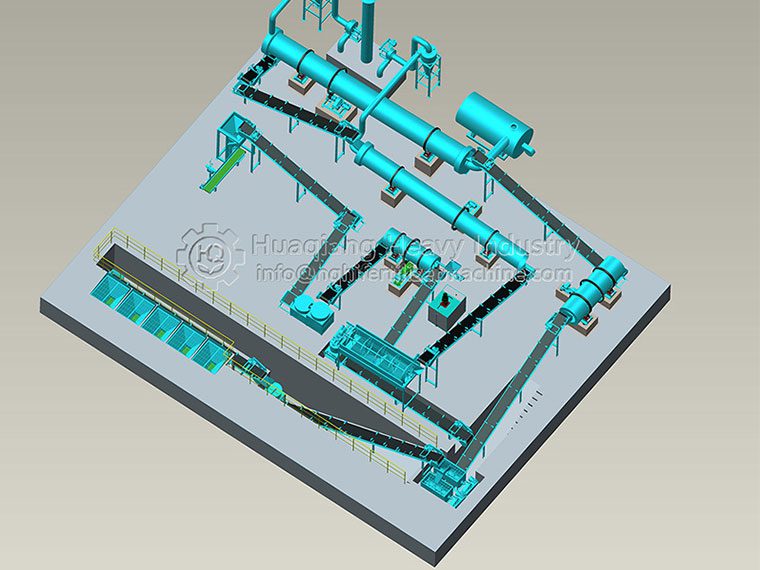
The fermentation stage directly determines fertilizer efficiency. The frequency of organic fertilizer compost turner must be flexibly adjusted according to the ambient temperature to ensure sufficient oxygen supply and even heat dissipation. Strict control of fermentation temperature is crucial to avoid nutrient loss due to high temperatures and incomplete decomposition due to low temperatures, preventing the production of undercooked materials and thoroughly killing any remaining pathogens and insect eggs in the materials.
Standardized operations are required in the mid-to-late stages of processing. The fermented material must be thoroughly crushed and sieved to ensure a fine powder without lumps. During the mixing and granulation process, the microbial agent and auxiliary materials are evenly added to balance the nutrients in the materials, stabilize equipment operating parameters, and effectively avoid problems such as uneven particle size, brittleness, and cracking, thereby improving the overall quality of the finished product.
Finally, proper finishing and storage of the finished product are crucial. Reasonable drying is used to control the moisture content of the finished product, preventing dampness, clumping, and mold growth during fertilizer storage. A second screening process removes substandard particles, demonstrating meticulous control over every detail of the organic fertilizer production line process.