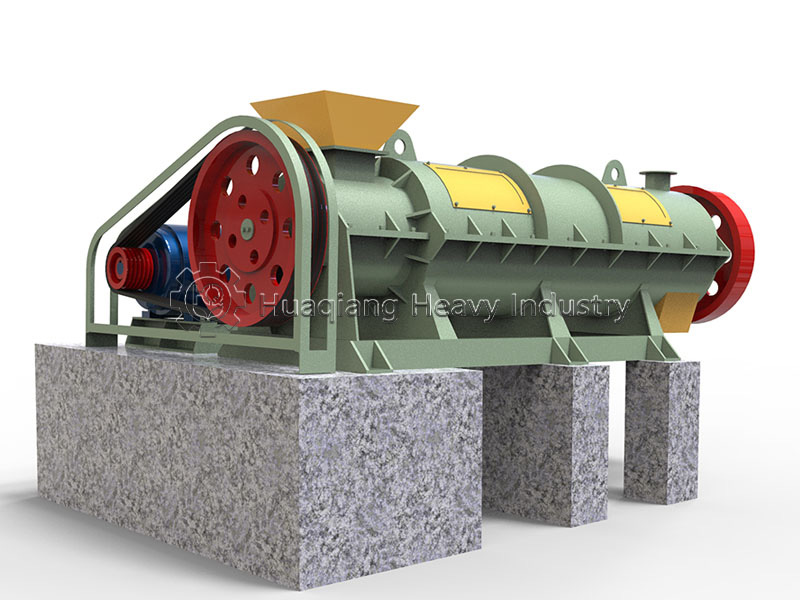
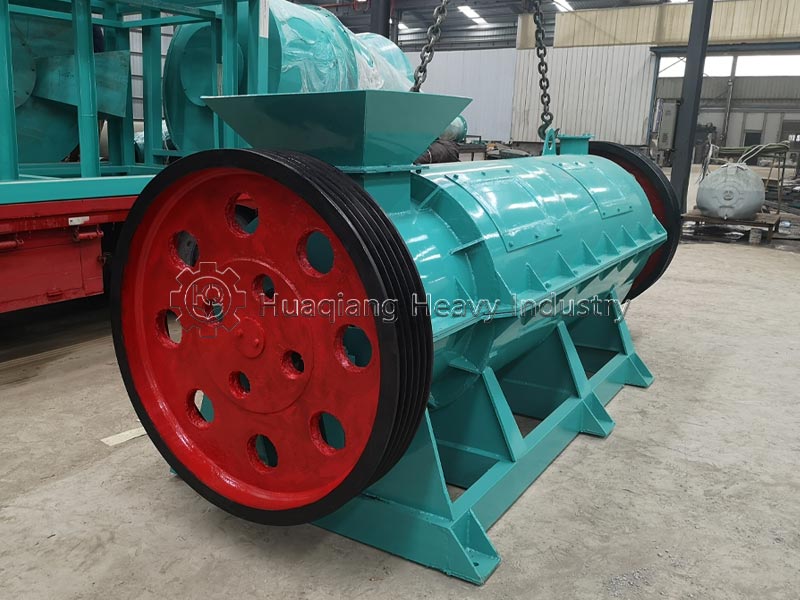
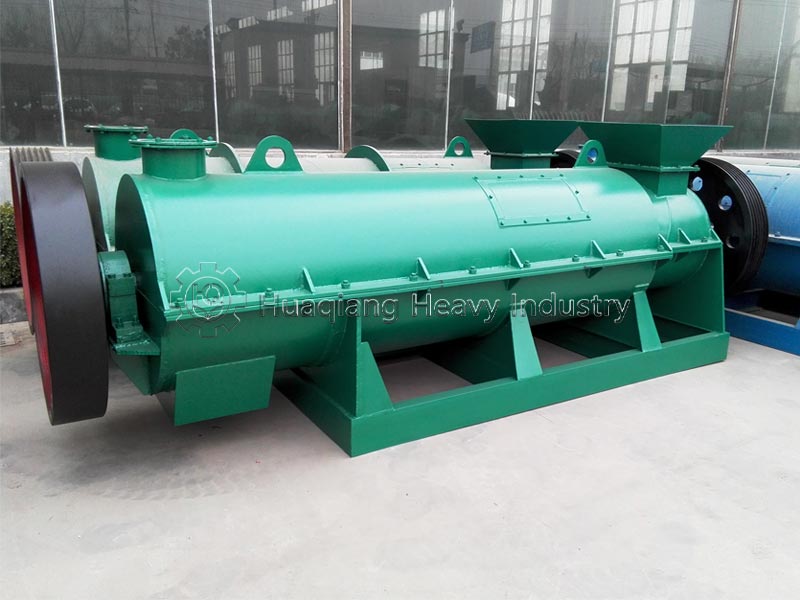
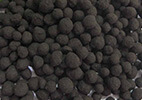
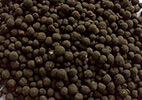
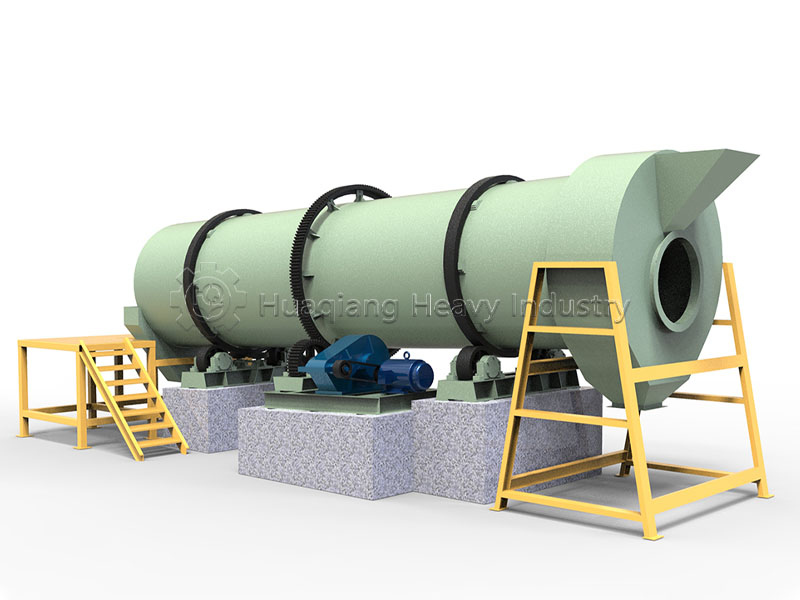
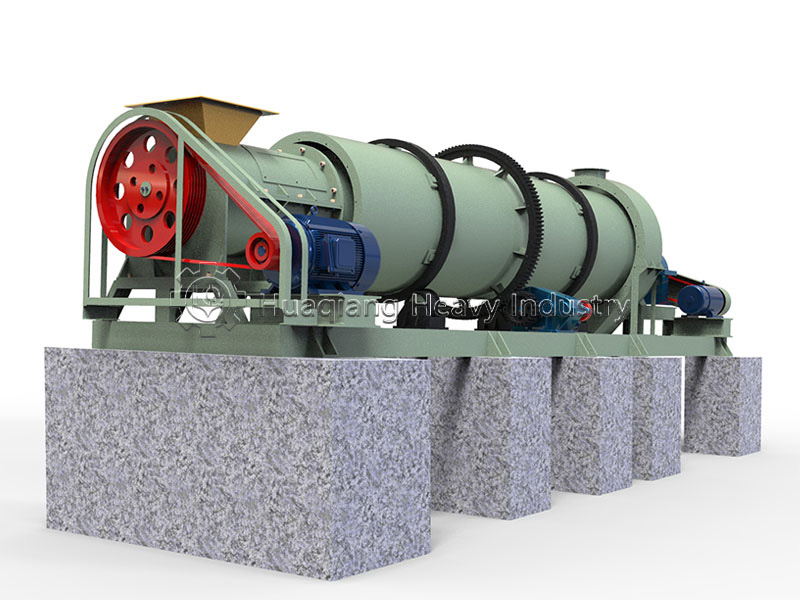
The new type organic fertilizer granulator is a specialized wet granulation machine developed to meet the industry’s trend toward spherical and functional products. It utilizes a high-speed rotating stirring mechanism within a vertical cylinder to toss and shape moistened materials into spheres. A key advantage of this process is its resilience to variations in material fiber content and moisture levels; sticky, wet materials—such as fermented chicken, sheep, or cattle manure—can be processed without clogging the machine or sticking to the walls, yielding perfectly round, spherical granules. Spherical organic fertilizer is more popular in the market than cylindrical pellets due to its superior appearance, excellent flowability, and suitability for mechanized application, making it an effective way to increase the value of commercial organic fertilizer. The equipment’s design accounts for the practical conditions of organic fertilizer production environments; with a wide range of adjustable operating parameters, it accommodates various raw material states and particle size requirements, offering a flexible and reliable solution for spherical granulation.
Granulation Process for New Type Organic Fertilizer Granulator
Raw material fermentation and maturation. Livestock manure and auxiliary materials are mixed in specific proportions and stacked for fermentation; the piles are turned regularly to control temperature and oxygen levels, ensuring the organic matter fully decomposes and stabilizes. Indicators of maturity typically include a shift in material color to dark brown, the absence of fecal odor, and a carbon-to-nitrogen (C/N) ratio below 20. The moisture content of the fermented material naturally drops to around 30%—the optimal range for the granulator—eliminating the need for additional drying or water addition.
Crushing and screening. Fermented material often contains impurities such as incompletely decomposed long straw, manure clumps, and stones. These are broken down by a half-wet material crusher, followed by a rotary screen to remove hard debris. The screened material—a uniform organic fertilizer powder—enters the feed hopper to await granulation.
Granulation. A screw feeder delivers a metered amount of powder into the granulation cylinder, where a high-speed rotating stirring disc at the bottom tosses the material into a rotating curtain. A spray system applies atomized water to this curtain; as the surfaces of the powder particles become moist, they adhere to one another upon collision, forming “seed granules.” These granules circulate repeatedly within the cylinder, picking up new material and growing layer by layer until they reach the target size and discharge from the outlet.
Post-processing stage. The wet granules discharged from the granulator have a moisture content of approximately 30%; they are fed into a dryer to reduce moisture to below 20%, cooled, and then sent to a rotary screen for classification. Oversized granules (meeting specifications) proceed to the coating and packaging stage, while undersized fines are returned to the feed hopper to be mixed with fresh material for re-granulation, ensuring material recycling and minimal waste.
Process Advantages for New Type Organic Fertilizer Granulator
High tolerance for material fiber content. Fermented organic fertilizer inevitably contains incompletely degraded plant fibers; the new type organic fertilizer granulator utilizes high-speed centrifugal force to disperse these fibers into individual strands. Once moistened, they serve as a structural framework for the granules, not only failing to hinder granulation but actually enhancing granule strength and crush resistance.
High commercial value of spherical granules. Spherical granulation is a natural outcome of this process: as material tumbles 360 degrees within the drum, granules grow uniformly in all directions, resulting in a shape approaching a perfect sphere. These spherical granules feature smooth surfaces and excellent flowability, making them easy to package and apply via mechanized equipment—qualities highly valued by farmers.
Ambient-temperature process. The temperature rise during granulation stems primarily from frictional heat generated by agitation; granule temperatures generally remain below 45°C, minimizing impact on beneficial microorganisms remaining in the fermented material or on added functional microbial agents. Compared to steam rotary granulation, which operates at temperatures exceeding 70°C, this process offers inherent advantages for producing high-quality bio-organic fertilizers.
Wide operational window and easy setup. The equipment involves only three primary adjustable variables—agitation speed, water spray rate, and feed rate—with uncomplicated inter-dependencies; operators can typically master the basic operating principles after just one or two days of setup and training.
Application in Fertilizer Production Lines
Integration with the drying system. Granules discharged from the granulator are spherical, with a concentrated particle size distribution and uniform inter-granular spacing; these characteristics facilitate airflow penetration and heat exchange. The dryer can operate at low-to-medium temperatures with a slow drying rate, preventing the rapid high-temperature drying that causes granule shells to harden and traps internal moisture. After drying, granules are cooled to near-ambient temperature, achieving optimal structural strength.
Screening and material return loop. After drying and cooling, the granules enter a double-deck vibrating screen; oversized particles from the top deck and fines from the bottom deck are collected separately. The fines are returned to the granulator’s feed hopper for recycling, while the oversized particles are crushed and mixed with the raw powder for re-granulation. Under normal operating conditions, the material recycle rate is maintained between 15% and 25%, ensuring high material utilization efficiency.
In bio-organic fertilizer production lines, two process options are available for adding microbial agents. One method involves mixing the powdered microbial agent into the fermented material before it enters the machine, leveraging the ambient-temperature nature of the granulation process to preserve the agent’s activity. The other method involves spraying a liquid microbial solution onto the surface of the dried and cooled granules, followed by low-temperature air drying to allow for colonization.
Application Scope for New Type Organic Fertilizer Granulator
In the pure organic fertilizer sector, the equipment processes various livestock and poultry manures—such as fermented chicken, pig, sheep, cattle, and duck manure—as well as agricultural organic wastes like straw powder, rice husk powder, sawdust, spent mushroom substrate, and biogas residue. The resulting spherical organic fertilizer granules are used as both base fertilizer and top-dressing for field crops, fruit trees, vegetables, flowers, and nursery stock.
In the bio-organic fertilizer sector, products are positioned as high-value-added functional fertilizers. Functional microbial strains, such as nitrogen-fixing bacteria and phosphate-solubilizing bacteria, are added to fermented organic materials; the mixture is then granulated to produce bio-organic fertilizer granules that improve soil quality and promote plant growth while offering disease-suppressing properties.
In the organic-inorganic compound fertilizer sector, organic base materials are mixed in specific proportions with inorganic fertilizers (such as urea and potassium fertilizers) before entering the granulator. This produces compound granular fertilizers that combine quick-acting nutrients with long-lasting organic matter, suitable for high-input, high-output cultivation scenarios such as cash crops and protected agriculture.
In the sector of soil conditioners and specialty organic fertilizers, special organic raw materials—such as humic acid and peat—are processed into spherical granules. These products serve niche markets, including the remediation of acidic soils, the treatment of saline-alkali land, and the mitigation of continuous cropping obstacles.